PAYBACKjöCUMULUSSTARBUCKS REWARDSMARRIOTT BONVOYMILES & MORE
60%Starbucks US revenue
68%Marriott stays worldwide
80%+Migros purchases
RewardReturnGrow
The same principle, made local
Big impact. Small-business scale.Recognize repeat visits, reward loyalty and turn more customers into regulars.
Payback, jö Bonus Club, Migros Cumulus, Starbucks, Marriott Bonvoy & Miles & More: What Loyalty Programs Really Deliver – Even for Small Businesses
August 23, 2026 · 6 min read
Key takeaways
The biggest loyalty programs in the DACH region and internationally show in hard numbers just how powerful loyalty programs are – almost every second German pays with a Payback card, roughly 60% of Starbucks' US revenue comes from Rewards members, and around 68% of all Marriott Bonvoy stays worldwide run through member accounts.
The common assumption that loyalty programs only pay off for large corporations with big budgets doesn't hold up: the underlying principle – rewarding repeat customers in a targeted way – works regardless of company size or industry. Small businesses don't need a million-euro budget for this, just a system that fits their scale.
Anyone looking at the success figures of major loyalty programs often draws the wrong conclusion: "That only works because there's a corporation with a huge marketing budget behind it." In fact, the same numbers mainly show one thing – how enormously valuable repeat customers are. And that value isn't created by company size, but by the principle itself: people who are rewarded for their loyalty come back more often and spend more. That holds true for a global corporation just as much as for the café around the corner.
The big role models in the DACH region
Payback (Germany). With around 35 million active users, Payback is Germany's best-known bonus program – more than every second German is a member. The redemption rate is particularly notable: roughly 95% of collected points are actually redeemed, a sign of how tangible and relevant the benefit is for members. More than 700 partner companies are now connected to the program.
jö Bonus Club (Austria). Austria's largest loyalty program was only founded by the REWE Group in 2019 and reached several million members within a few months. Today, the jö Bonus Club has around 4.7 million members, reaching an estimated four out of five Austrian households – proof of how quickly a well-designed program can achieve broad reach once it simply works from the customer's point of view.
Migros Cumulus and Coop Supercard (Switzerland). Switzerland's two largest loyalty programs show how deeply customer loyalty can be embedded in everyday life: over 80% of purchases at Migros run through the Cumulus card, and around 75% at Coop through the Supercard. Cumulus has existed since 1997 – an example of how a good loyalty program can stay relevant for decades if it's continuously adapted to customer needs.
The international role model: Starbucks Rewards
Few loyalty programs are cited as a reference as often as Starbucks Rewards – for good reason. In fiscal year 2025, around 60% of Starbucks' US revenue came from transactions by Rewards members. According to the company, members visit stores about 5.6 times more often daily than non-members, and the retention rate is around 44%, compared to an industry average of roughly 25%.
What's remarkable here: Starbucks Rewards started in 2009 as a simple punch-card concept, long before it evolved into a sophisticated app ecosystem. The core mechanism – rewarding repeat visits – was simple from the start and remains simple at its core to this day.
Beyond retail and hospitality: hotels and airlines
Two further internationally known examples from completely different sectors show that customer loyalty works across industries:
Marriott Bonvoy (hotels). The loyalty program of the world's largest hotel group had around 271 million members at the end of 2025 and grew to over 295 million in 2026 – making it the largest hotel loyalty program in the world by membership. For Marriott, the decisive value doesn't lie in the raw member count but in their booking behavior: member stays accounted for around 75% of all room nights in the US and Canada in 2025, and around 68% globally. This impressively shows how deliberately guests in an industry with many interchangeable providers choose brands where their loyalty pays off.
Miles & More (airlines). The frequent-flyer program launched by the Lufthansa Group in 1993 is, with around 39 million members, the largest of its kind in Europe. Even everyday spending – via a credit card or partner companies, for instance – can be converted into miles, not just flights themselves. This example illustrates a point that's also relevant for small businesses: customer loyalty doesn't have to be limited to the core service; it can capture and reward any recurring interaction with your offering.
Both programs differ significantly in technology and structure from Payback or a digital loyalty card at a café. But the underlying principle is identical: recurring behavior is made visible and deliberately rewarded, making customers more likely to choose your business over an interchangeable competitor.
What these numbers mean for small businesses
The programs mentioned aren't comparable to a single café or studio in terms of reach and technology. But the underlying economic principle is, and there's further evidence for that independent of these large-scale programs:
A study by Adobe shows that repeat buyers in e-commerce make up only about 8% of all visits, yet generate a full 40% of revenue. A single repeat customer is therefore, in revenue terms, worth as much as several new customers combined.
According to widely cited calculations by Bain & Company, increasing the customer retention rate by just 5 percentage points can boost a company's profit by 25% to 95% – an effect that occurs regardless of company size, because it's rooted in the economics of repeat customers, not market power.
These figures explain why smaller, owner-operated businesses also benefit from loyalty programs, even when they implement their program with far less effort than a large corporation.
Why small businesses are actually at an advantage here
An often overlooked point: small businesses don't need to think of their loyalty program on the same scale as Payback or Starbucks for it to be effective. On the contrary, they have structural advantages that large programs simply don't have:
Personal contact. A café owner often knows their regulars by name – an advantage no multi-partner bonus program can replicate. The digital loyalty card only makes this personal bond visible and traceable; it doesn't replace it.
No dilution effect. In a multi-partner program like Payback, hundreds of partners compete for the same members' attention. A business's own, simple program belongs entirely to that business.
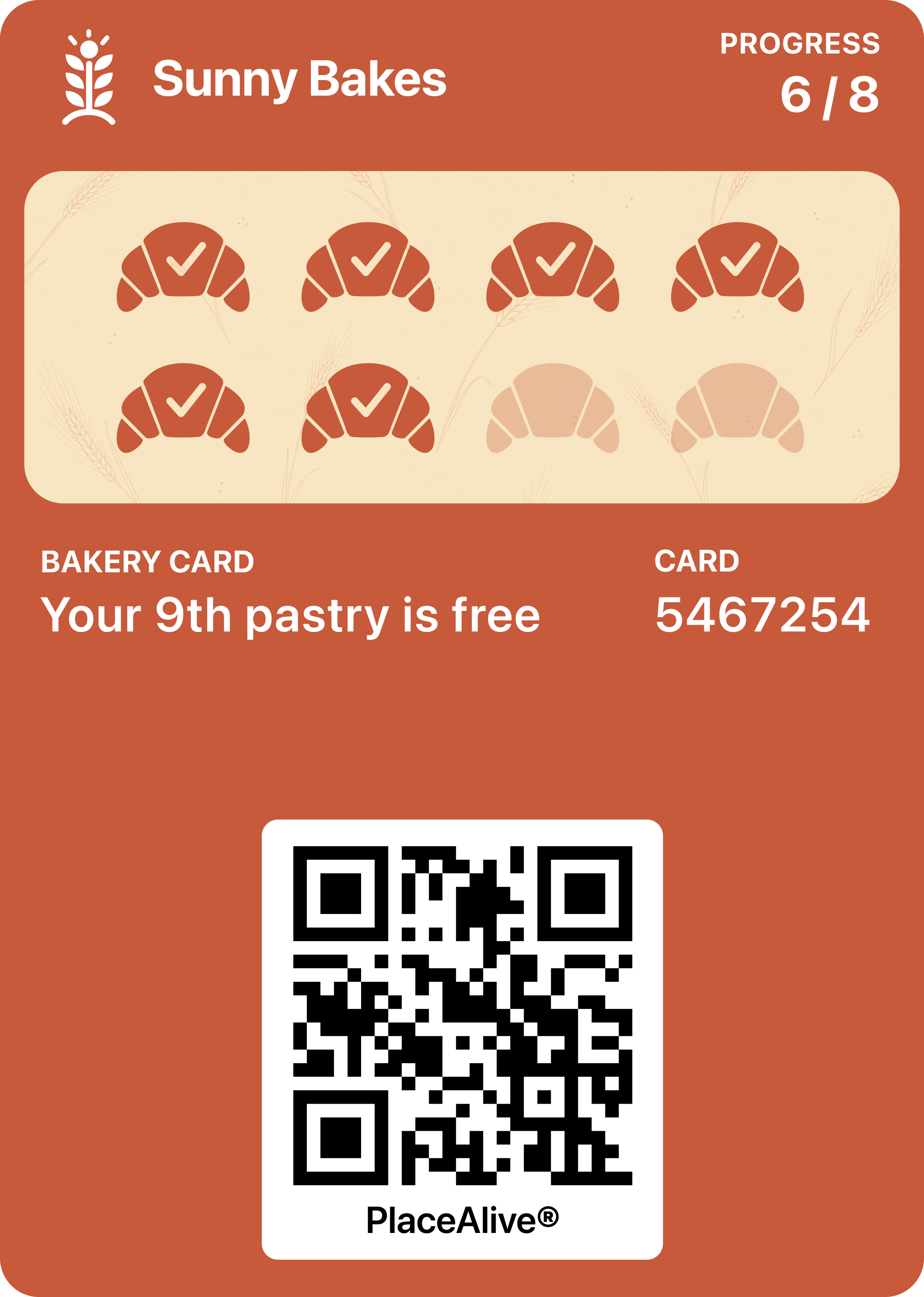
No million-euro budget required. The economic leverage described by Bain & Company and Adobe comes from the bond itself, not from the size of the infrastructure behind it. A simple digital loyalty card that works without an app and without training overhead can trigger the same core mechanism as a billion-dollar rewards program – just at the scale of a single business.
This is exactly the flaw in the myth that customer loyalty is "only for the big players." It's not the size of the program that creates the economic effect, but the principle: whoever recognizes and rewards repeat customers earns more from them. A small business doesn't need to build a multi-partner ecosystem for that – it just needs to start recognizing who comes back at all.
The bottom line
Payback, jö Bonus Club, Migros Cumulus, Coop Supercard, Starbucks Rewards, Marriott Bonvoy and Miles & More prove, in impressive numbers and across completely different industries, that customer loyalty works – from grocery retail to coffee chains to hotels and airlines.
But these numbers aren't an argument against small businesses; they're an argument for them: they show just how valuable a single repeat customer is – a value that even the smallest café or studio can capture, as soon as it starts making repeat visits visible and rewarding them. The first step doesn't have to be big. What matters is taking it.
Frequently Asked Questions
Is a loyalty program worthwhile for a single small business?
What can a small business learn from large programs like Payback or Starbucks Rewards?
Does a small business need its own app for an effective loyalty program?
Does customer loyalty only work in retail and hospitality?